Friday, September 07, 2012

Baltimore to NY: Day 3

[Kyle]I woke up while it was still dark, dreading the prospect of going back out of the inlet {Maryanne: I insist you have to go out the outlet, and it isn't called an inlet when you are going out}. The weather was supposed to be flat calm all day. I thought about it a while and decided to leave on the highest tide that would allow me to get under an intervening bridge. That way, there should be less chance of surf and what surf there was should have more water under it. I should be able to go out with a meter and a half more water than when I came in.

I realized that I wasn’t going to be able to sleep with all of the worrying, so I just decided to get up. I checked the NOAA site over coffee and found out that they had issued a rip current and heavy surf warning for the east coast due to long period swells pushed ahead by Hurricane Leslie 500 miles to the east. They were expecting it to last all week. Yikes! I only had a few days before my 15-knot tailwinds were forecast to shift to 30-knot headwinds for the foreseeable future. It's definitely time to keep pushing north.

At first light, I braved the bugs and the smell and went out on deck to see what I could of the distant inlet through the binoculars. What I could see was pounding surf that looked worse than the day before. I tried to remind myself that it was dead low tide and that it should improve as the water rises and that I couldn’t see the whole inlet from my anchorage.

As the tide rose, I busied myself with making a big meal and getting the boat ready. While I did that, I kept trying to distract myself by playing podcasts on our radio, but I couldn’t stop worrying about how I was going to have to go out there eventually. I decided that I would take a look. If I couldn’t find a way out, I could always come back for as long as I needed – to the marina, not the stinky anchorage.

Just after I pulled up anchor, I saw a Coast Guard patrol boat leave the inlet. With our AIS (Automatic Identification System), I was able to see his route into the ocean. When I got there, conditions weren’t nearly as bad as I’d feared. I could see a clear path out using the Coast Guard route. There was also another option along the buoyed channel. Not sure of the CGs draught, I chose the latter route with nothing worse than steep swell. Toward the end, I could see my mistake from the previous evening. Another buoy had been placed off the direct line between the safe water buoy and the one I headed towards. I hadn’t seen it because it was frequently hidden by surf from that angle. My shortcut was still in an area of alarming surf. The zigzag took me completely around it on the way out.

For the rest of what was a short day compared to the previous two, not a breath of wind blew. I motored on one engine up the coast on a sea only broken by Leslie’s swells. I stayed just outside the surf where the motion was somewhat soothing until I arrived at Little Egg Inlet.


The Coast Guard and Tow Boat US performing practice rescues in the Atlantic - and Atlantic City in the distance

Once I got near enough, I could clearly see the breakers on radar, then by sight. A big sport fishing boat blasted by me on his way into the inlet. I followed his target with the radar as it appeared on the chart to travel right across several sandbars and avoided deep water. I followed his track until I could spot the buoys then crossed the same 'sandbars' in smooth water. The depth never went below 11m and the deep water on the chart was a mess of jumbled breakers. The Coast Pilot says the buoys along the NJ coast aren’t charted because of shifting inlets that change too often. This particular inlet had no resemblance to the chart at all.

Once safely inside, I followed the buoyed channel around the corner to my selected anchoring spot. As I was getting ready to turn out of the deep channel into the anchorage, the depth sounder reading started plummeting. I was on the correct side of the adjacent buoy in water the chart also said should be deep, but it was still getting shallower. I turned, but that made it worse. I turned the other way and it still got worse. I put the engines in neutral and had almost stopped when I touched bottom.

Just then, a guy on a SeaTow boat called me on the radio to tell me it was shallow there. Well, no kidding! He came over and directed me back into deep water, which was nowhere near the buoy, by the way. My grounding had been soft enough that I was able to just put the engines in idle reverse and back off. Once I was back in deep water, he helpfully told me how to get back to the inlet so I could get to the ocean. {Since we are not even Sea Tow members, this fantastic assistance and information was extra nice}

I explained that I just came from there and I was trying to anchor for the night. He suggested a protected spot nearby and told me how to avoid coming to more grief along the way. Inlet channel buoys are changed all of the time. They’re right. The other buoys are all wrong. Jeez, how does anybody find their way around here?

As I applied power for the trip to the anchorage, the right engine started shaking wildly. I brought it back to idle, then put it in reverse. Reverse seemed smooth. Back to forward. It started rough, and then got smooth. When I backed down on the anchor, it shook again wildly, I tried forward again and it was rough too. I was worried that I bent or even threw a blade or perhaps the shaft was bent. Once I was finished with securing everything, I once again donned mask and fins and once again found a fish trap float line wrapped around the prop. This time it was wrapped loosely so that it didn’t interfere with the operation, but swung around and threw the whole thing off balance.

My anchorage smelled better, but was still surrounded by miles of buggy swamp, forcing me inside for the evening. I’m beginning to understand why I don’t recall seeing any books entitled “The Cruiser’s Guide to New Jersey”. If only Maryanne were here. I wouldn’t need to stop for sleep and this whole thing would have been two offshore days of sitting alternating watches. But then I would have missed all of these great New Jersey destinations. {Maryanne: He's still grumpy isn't he? Clearly Kyle was never meant to sail alone, we'll have to sort that out soon}


And missed another beautiful sunset!

Baltimore to NY: Day 2

[Kyle]A closing weather window and the desire to take full advantage of Delaware Bay’s strong tides necessitated a departure in the dark the next morning. I realized once it was too late that I could have skipped the coffee before leaving. The adrenaline of motoring down a pitch black river full of unlit “no wake” buoys, fish trap floats and other debris was more than enough to wake me right up. I kept thinking about the huge stump I saw floating up the river with the tide the night before. I was constantly running to the bow to scan the water with the spotlight, then running back to the helm to change course. I tried to use the spotlight from the helm, but so much of the light fell on the boat in front of me that it completely washed out the background. As soon as I made a course change, I worried I couldn’t see and as soon as I spotted something with the light, I worried I wouldn’t make it back to the helm in time to dodge it. {It looks like we'll be adding a wireless remote autopilot to Kyle Christmas list!}

I arrived at the Bay proper just as the first hint of light made seeing a little easier. I forget who said it, but the Delaware Bay has been called the nautical equivalent of a root canal: nobody enjoys it, but it’s something you just have to get through. That sounds about right to me. I’ve been through it a few times and it’s always a chore. I was going to write my shortest blog entry ever called “Things to Like About Delaware Bay”, but I decided to have the longer rant about it here. The entire entry would read: “If you’re going from Baltimore to New York, it’s a lot shorter than going all the way out the Chesapeake Bay entrance”. That’s it. There is nothing else to like about Delaware Bay. Like that other awful body of water, the Irish Sea, Delaware Bay is shallow and brown and has such strong currents that even calm wind days are choppy. In addition, the Delaware Bay has nothing of any interest on either side, which is fine, because the route from the center runs a maze of shoals and hazards. A very busy shipping channel that is just littered either side with fish trap floats cuts the wide bay. {Visitors might sense Kyle is getting a little curmudgeoney.. Time to get him home soon I think}

The first few miles were due south directly into the wind until passing the Salem nuclear power plant. In order to avoid the procession of ships, I had to weave my way through the float zone. There were so many of them that I didn’t dare leave the helm for even a drink of water or a pee. I dipped into the shipping channel during a gap and put the sails up. Begonia is much faster under sail than under power. It was a pleasure to go zipping down the bay ticking off the miles. The current heaped the bay into an uncomfortable boiling froth, but at least it was going my way.

As the current peaked, I was “enjoying” a nail-biting slalom run through the floats. I turned upwind to dodge one only to have to turn further for another, using my inertia to carry me past and then swinging the wheel to leeward before the boat stalled. Another float appeared and I didn’t have enough rudder authority at the low speed to avoid it. The boat slowed and the steering became sluggish. The float had not popped out from the stern.

I tried hard turns both ways, hoping it was just caught on the rudder and that would free it, but I still couldn’t get hardly any speed. I had to pull the sails down, stop the boat and have a proper look. Leaning way over the side, I could see the offending string of floats sticking out between in the area of the sail drive between the keel and the rudder. I leaned and yanked and poked it with a boathook all to no avail. With a dock line tied to me to keep the boat from drifting away, I donned mask and fins and went in for a look. The float line had somehow managed to get wrapped around the drive leg, two prop blades and the rudder shaft, even though the prop was not turning and the boat was going basically one direction. It took me four dives, but I finally managed to unravel the whole thing. I emerged gasping for air, spitting seawater, covered in rubbed off blue bottom paint and screaming obscenities at all fishermen.

With the fish trap no longer dragging me down, I was drifting fast through yet more traps. I didn’t dare start the engines so, still dripping wet, I unfurled the jib in the hope of getting enough steerage-way to point upwind to raise the main. I was just slowly making the turn when, unable to steer fast enough, I snagged another line. Again, I had to furl the sail, stop the boat, dive in and untangle the line. I now officially hate fishermen.

I had lost the current, which was reversing fast, and I now needed to point as far upwind as I could to have any hope of eventually clearing Cape May and making it into the Atlantic without tacking.

It was a long, root canal of a way, but I finally made it into the Atlantic. Ahh, the Atlantic, so free of stuff to hit. I made a turn downwind and had such a fast sail that I decided to skip the stop at Cape May and push on to Great Egg Inlet, near Ocean City.


Distant lands of Cape May

It was a race to arrive by sunset. When I got there, a huge thunderstorm was over the inlet, making it even darker. I could see some breakers on radar, but it was getting confused with the rain return. I got to the safe water buoy at the entrance and turned in on the prescribed course towards the next buoy.

After a few minutes, the water started getting weird. The two-foot waves I had been in all day were turning into five-foot swell that seemed to be getting steeper and steeper. Ahead, I could see that I was approaching the back of a surf line. I checked my depth and the chart and they seemed to be in agreement. Still a little nervous, I picked the least swelly looking bit and continued on. The depth sounder reading went from 10m to 4m, the charted depth of the channel. Then it went down to 1.7m (our draught is 1.2m) before a breaking wave hit and it went to dashes in the turbulence. Begonia slewed thirty degrees and then righted herself, and then the sounder showed 6.5m. Whew!

I was jacked up all over again, just like in the morning. Five-foot breaking waves are not a danger to the boat by themselves. My concern was WHY they were breaking. The 1.7m reading could have been caused by underwater turbulence or there could have been an uncharted sandbar there.

It was clear on the other side and I had no other issues coming in, except for the stress caused by the waning light and the sound of the breakers on either side of the deep channel. I looked back for a smooth way out the next day and could not see one. I was NOT looking forward to going back out.

I wove my way a couple of miles into the inlet and set the anchor in a protected spot. Bug filled marsh again surrounded me. This one had the unfortunate addition of smelling like a cross between low tide and a warm dumpster. I was glad it was only for a short night.

Baltimore to NY: Day 1

[Kyle]We were up SUPER early in order to have Maryanne at the Inner Harbor by 4 a.m. for her train to NY. Once I dropped her off, I retraced our path in the dark past our anchorage at Key Bridge, past Stoney Creek and back into Chesapeake Bay.

The wind, sun and tide all arrived at the same time and I had a great time making it back to Still Pond in half the time we had before. The weather forecast for the next week indicated it would be a good idea for me to make a really long day of it and keep pushing all the way through the Chesapeake and Delaware Canal.

As the Bay slowly narrowed down to the canal, the unimpeded wind of the open bay diminished. My sail became a motorsail and then just motoring when the sails finally were just hanging there uselessly.


Heading East in the Chesapeake & Delaware Canal

After I left the canal, I crossed the Delaware to the Camden River. A few miles upstream, I made it to my anchorage at the town of Camden. Actually, Camden didn’t seem so much a town as a series of houses along one side of the river that became increasingly dilapidated the further upstream I went. This culminated in the ironically named Camden Yacht Club. The “yachts” were mostly aged powerboats, many of which seemed barely afloat or possibly resting on a shallow bottom.

As I approached, I was the recipient of several “Deliverance” style stares. They seemed to be not sure if I was expecting to tie up or get fuel. When I continued on and dropped anchor just upstream, more people came out to stare. I did my whole post-sailing checklist with an audience. They must not get too many cruisers stopping by in fancy sailboats. I have no idea why, but then I’ve been to Wick (recall?).

In Camden, the side of the river not lined with houses is marshland as far as the eye can see, making a home for every conceivable variety of biting insect. There were several different species of flies, mosquitos, flying ants and worst of all, no-see-ums, or as the West Indians call them: teefs. Even though the inside of the boat was a greenhouse warmed even further by the engines, I had no choice but to retreat into the only bug-free space for miles

A holiday weekend ends

[Kyle]After a nice, lazy weekend, it was time to take Maryanne back to Baltimore for her train for work.

On the Monday afternoon we had a fast sail back across the Bay from Still Pond along with everybody else returning from the weekend. I was particularly enjoying the sight of a couple of monohulls going the same direction in front of us that were rapidly getting bigger. My plan had been to pass them just as we were enjoying hors d’oeuvre’s spread out festively on the cockpit table. I would wave nonchalantly to the soaking crews hiked out on the rail as we zinged by. Unfortunately, they peeled off (at Middle River, no less) just before I got to them, so a portion of my fun was foiled.

To the south towards Annapolis, a huge, ugly looking gray sky indicated a storm was approaching. We could hear several boats on the radio that were talking to each other about it. Some had just come through; some were just getting into it. NOAA Weather Radio was broadcasting all sorts of “seek safe harbor” announcements. We kept track of it with radar which assured us we’d miss the deluge. When the storm passed nearby we rolled up the genoa to protect ourselves from any gusts. We were still chugging along under main alone and managed to get into the Patapsco between the worst of the showers. All we saw was a few seconds of biggish raindrops.

I had planned to anchor again in Stoney Creek the night before Maryanne’s early train for all of the reasons I picked there to wait for her arrival. This time, however, I intended to anchor outside the drawbridge in order to avoid delays dealing with what I have come to decide is the world’s most dim-witted bridge tender. Scratch that, I just remembered the Elizabeth City guy. The Stoney Creek guy is a VERY close second. {Kyle has yet to learn public tact - sorry all}

When we got to our intended spot, which was the only one on that side of the bridge, we found that a local fisherman had taken up all of the usable anchoring space with closely spaced pots. I wanted to stay and see if I could make something work, Maryanne was for giving up and sucking up the extortionate holiday cost of a slip in the Inner Harbor.

After some, ahem, discussion on the matter, I grumpily agreed and headed for Baltimore (Why does she always end up being right in the end? It’s VERY annoying.). Now, although she is not apparently known for it as well as I am, Maryanne can also be cheap about certain things. She particularly dislikes overly expensive restaurants and paying $100 per night for the use of each of two cleats. While our guides were pretty clear that there were no particularly nice or protected anchorages between Stoney Creek and Baltimore, the weather was settled and we just needed a safe spot too shallow for shipping that was out of the way. Maryanne pored over the chart and found a suitable looking spot at the mouth of Curtis Creek. Since I had cell phone reception, I looked on Google Earth to get more of a feel for what was on the chart. It turns out our chosen spot was right next to the Baltimore Waste Water Treatment Plant. Uh, Veto! I looked again and was able to find a spot at one end of the Key bridge next to the power plant. It wasn’t particularly pretty, but we were out of shipping’s way, we had the whole place to ourselves AND it was exposed enough to keep our wind generator spinning all night so we awoke with full batteries.

So we spent the evening anchored by the bridge enjoy relative quiet and privacy with a nice meal and a glass of wine.

[Maryanne] The Bridge is called the Francis Scott Key Bridge. For my fellow Brits I'll let you know who Francis is.. He's the attorney/lawyer who watched, from a truce ship in the Patapsco River, the British fail to take Fort McHenry way back in September 13 1814. By dawn the American flag was tattered but still flying and he was inspired to write a poem. That poem eventually became the 'Start Spangled Banner' and the American national anthem.


This very unusual buoy is placed during the summer season in the river, at the very spot he viewed the battle from.

Sunday, September 02, 2012

Labor Day Weekend

[Kyle]Kate and Mark were unfortunately unable to make it for the weekend. Maryanne and I decided to skip the stress of Baltimore altogether and took a longish sail up the bay in light winds.

As it was a holiday weekend, boats were out everywhere. Most were being operated by people who I assume only get out two or three times per year, and made for alternating frustration and entertainment. The radio on channel 16 was filled with the continuous noise of angry people screaming at others about their wakes, or wondering why a commercial fisherman was upset with them after motoring over fishing gear. We weren’t in the main harbor, so it affected us mostly by just making the radio chatter annoying or entertaining.

The most entertaining moment was when a man called the Coast Guard saying he was lost. When they responded, he gave them a GPS position, and told them he was just outside Pleasure Island. Someone asked if he had a chart. He responded that he did, and that he was lost. At another point, a spaced out couple on a powerboat came over to us and yelled “Middle River”. After a little confusion, we were able to determine that they were completely lost and were asking us which way to Middle River. We gave them our best directions, but Middle River was far enough away that we were sure they wouldn’t make it all the way without finding someone else to ask.

We found a couple of boats going our direction and tried to get into informal races with them, but they were tippy boats dragging big pieces of lead so as soon as we unfurled our sails, they would soon shrink behind us toward the horizon, ruining our fun.


Finally, nice weather and pleasant sailing

As afternoon arrived, the wind began departing. We managed to keep up our speed by hoisting our spinnaker for a while until even it wouldn’t stay filled anymore. We fired up the starboard engine for the rest of the way to our anchorage at Still Pond. It was more full than we had ever seen, but there was still plenty of room for us to pick out a relatively secluded spot for a quiet weekend aboard. The forecast was for a high probability of rain, so we decided not to have any plans, per se, but to just take it as the weather allowed. It’s nice to be back together aboard our own boat.

An Easy One

[Kyle]I motored the short seven miles to the next harbor in light headwinds. Maryanne was coming into Baltimore via train and we also were expecting our good friends Kate and Mark, with whom we sailed across the Aegean a year earlier, to drive up from Norfolk.

A couple of complications of a Baltimore pickup were that it was Labor Day weekend and there was a grand prix race taking place on the waterfront at the Inner Harbor. Competition for berthing space was high and the local maritime businesses were responding by jacking up prices accordingly.

My goal then became to get near enough to Baltimore to avoid the price gouging while still being close enough for everyone to be able to get to Begonia easily. I found a nice spot in Stoney Creek where I was able to spend the next couple of days pottering around the boat fixing minor things, swimming and reconnoitering landing spots for pickup.

Maryanne arrived late Friday after a full workday for her. Even though she must have been pretty tired, we were still able to find time to lie out on the trampoline, talking and enjoying the stars on our newly fixed-up boat.

A Long Sail

[Kyle]I was up early the next morning for my next leg up the Bay. My early plan was to stop at Tippity Wichity Island in the St. Mary’s river on the north side of the Potomac. The forecast, however, was for an unfavorable wind shift the next morning. I decided to make the most of the current favorable wind that I could while I still had it.

When I got to the point that I would have needed to leave the Bay for Tippity Wichity, I was making good way on a comfortable point of sail. I was feeling rested and alert, so I decided to continue on to the next logical stop at Solomon’s Island at the mouth of the Patuxent River.

I arrived at the Patuxent just before sunset. The wind had picked up, was still out of a good direction and I was still feeling alert. The long stretch of Chesapeake Bay between the Patuxent and the Annapolis area is a desert of decent anchorages, at least on the western side. To continue would be to commit myself to another eight hours of sailing. With the next day’s forecast headwinds, it would be at least twice that much time tacking back and forth against it. I decided to continue on while the wind was so favorable, made a pot of coffee, and settled in for the night.

It was marvelous sailing. I had the whole bay to myself, the wind was from behind and warm and the nearly full moon lighted my way.

At 2 a.m., I arrived at Annapolis. Even though I had been up for twenty-three hours straight, I was still feeling surprisingly good. I decided to continue for another three hours to another anchorage at Bodkin Creek, at the mouth of the Patapsco River, upon which lay my weekend destination of Baltimore.

By the time I pulled out of the main channel for the Bodkin Creek inlet, I was starting to fade noticeably. It was short lived, however. The minute I pulled out of the main shipping channel, two things happened: The Moon went down, removing it’s helpful light and I suddenly came upon a minefield of crab pot floats. If a prop picked one of the float lines up, I would be disabled. There’s nothing like threat of impending disaster to get the adrenaline flowing and wake a person up. With spotlight handy, I wove my way in on a crazy zigzag path into the harbor involving lots of crash stops and full rudder turns.

Once inside the harbor, the floats stopped and I was able to find a nice spot in the middle of the river with good holding. I had come so far that I now had the luxury of only needing to go another seventeen miles or so over the next three days. Wind direction was now much less critical. I could take the last few miles at a much more leisurely pace.

As I was falling asleep just at the first light of day, I heard the rain come, signaling the arrival of the wind shift.

Finally, a Weekend Aboard and Together

[Kyle / Maryanne] So, after our working trip to Ottawa, Maryanne and I finally got a weekend in which to enjoy the newly refitted Begonia. At least this was the plan.

I arrived on the Friday evening at Richmond airport, Kyle collected me and we headed off to a Mexican restaurant that had been a regular haunt in the days when I collected Kyle from Richmond after a work trip (when he could not fly into Norfolk) way back when we lived in Virginia. Since this was to be our last weekend in Virginia for the foreseeable future it was a nice way to say farewell (and saved any late night cooking and cleaning up).

With a forecast for showers in the morning, we felt no guilt about sleeping in to our hearts’ content as the occasional shower passed over the boat. Just about Noon, the first patches of blue sky started peeking through and we cast off the lines for an afternoon sail followed by an evening anchored in a nearby bay. The weather was miserable, but Kyle was convinced it would break. He’d planned for a good test sail for me to see my new boat in action, followed by a romantic night at anchor, he hadn’t planned for the weather and I was all for giving up and staying at the dock. With an ear to the weather channels and the VHF and an eye on the radar, Kyle determined by mid afternoon that we could head out; I certainly was not so convinced. It was still blustery, and by the time we’d left the dock heavy rain returned, by the time we left the tributary there were emergency warnings of tornadoes and waterspouts – Yikes, if only that had been announced 30 minutes earlier I’d have insisted we stay at the dock.

Before we had even left Broad Creek, where our marina is located, it started raining. I mean RAINING. Lightning was everywhere and rain was bouncing off the deck and striking me in the eyeballs so hard, I had trouble seeing. Returning to the dock for an indoor weekend, while desirable, was suddenly a completely unsafe option. We were in the mariner’s position that seems counter-intuitive to non-sailors where our most safe option was open water away from all of the dangers of harbor.

As we continued out into the Rappahannock, things got even worse. They continued to get gradually worse for the next few hours. The radio was alive with warnings of severe thunderstorms and waterspouts.

It was uncomfortable and I was completely soaked outside at the helm, but Begonia was just fine and Maryanne was dry inside. It was a good thing.

Yes, poor Kyle was drenched, and I was occasionally supportive and decided to stay inside – no point in us both being miserable; teamwork doesn’t mean we both have to get wet and cold, I’d have a towel at the ready, my small contribution!

As we approached our anchorage, I had some concern as to whether or not we would still be safer in deep water. The weather and latest forecast all suggested the worst was very much over, however, so we gave it a shot.

By the time we had finished setting anchor, the skies were clearing again. The remainder of the evening was actually very pleasant. I tried, but Maryanne wasn’t buying that I planned it that way. Hmm, setting the anchor in the rain, and the prospect of an early start and a miserable sail (more like motor) back to the marina before a long drive home in the morning - not exactly the idyllic sailing weekend I’d imagined.

By morning, the crud was back and we had a pretty long slog back to the marina, where I dropped off Maryanne. The time had come for me to begin making my way north in Begonia. Maryanne was taking our rental car back to NJ.

She drove through horrid road conditions caused by the storms while Begonia and I got a good soaking crossing the Rappahannock.

By the time I got into Maryland, the rain finally died down a bit and I got a real wind for a fast sail to my first anchorage at Mill Creek in the Great Wicomico. This is one of my favorite anchorages in Chesapeake Bay. We have stayed here many times before. It was in fact the first anchorage where Maryanne and I anchored Footprint after we picked her up from the factory.

My evening in my favorite “quiet” anchorage was spent watching lightning shows and listening to thunderclaps. I took advantage of all of the free water with a combined outdoor shower and deck wash.


Finally some more reasonable weather

Tuesday, August 28, 2012

A Mini-Break to Ottawa

[Maryanne]It seems Kyle has spent every moment of spare time at the boat for the last two months. My timetable is more rigid than his, and my attempts to join him some weekends have been foiled by flight cancellations and bad weather.

Just as it seems the boat is eventually ready, and we can actually sail it, we'd missed our chances to be together on the boat for a weekend; Kyle had to work.

We were able to make lemonade out of lemons though since Kyle had a Saturday and a Sunday overnight in Ottawa, the capital city of Canada. Well, if I can't join him for work aboard Begonia, I can certainly join him for fun and adventure in Canada for a weekend get-a-way.


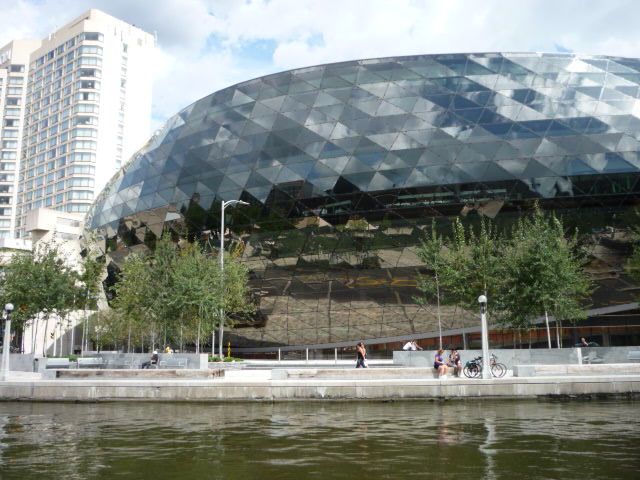
Random Ottawa scenes - what's not to like?

We could not have been more lucky, the weather was beautiful, as was this wonderful small city. We ambled, ate, relaxed and enjoyed the views. The city was filled with things to occupy and amuse: cycle trails, hiking trails, black squirrels, fantastic architecture, sculptures to trip over everywhere, a flight of canal locks, and so much more. Much was free (a tour of the Federal and Supreme courts, and a evening light show projected onto the Parliament building), or really inexpensive ($6 bicycle rental for the day, with pick-up and drop-off points every where you might need one).


The canal, parliament's library, and, of course, beer!

We thoroughly enjoyed our break (even though Kyle was technically at work) and recommend Ottawa to all.


Maryanne has a try as Federal judge.. watch out, she enjoyed it!

The Refit is Done!

[Kyle]Finally, Begonia is in her slip as a regular sailboat instead of an injured-looking project boat.


Begonia is a sailboat again

The last few weeks have been tough. While my list of jobs to do has been winding down, the yard here still conspicuously had major work remaining. Parts were delayed and I was beginning to get very nervous Begonia wouldn’t be finished in time. Increasingly frustrated, I struggled to ride the line between not letting the yard have any slack and not irritating them to the point that they no longer wanted to help me.

It was close. The major parts for the mast and crossbeam arrived with just over a week to go, with some critical minor parts for each still on the way. All of the parts for the heating system were already there, but the installation was a big, time consuming job. It took constant pressure from me to keep them from taking our installer for more pressing (for them) tasks. As our deadline approached, the remaining work got compressed into a smaller and smaller window.

We got the crossbeam on right at the end of business for the day. I worked until dark wrestling the trampoline back on. I was so tired afterwards I could have slept right there on it, but the biting bugs were coming out for their dusk feeding so I had to drag myself inside.

Two days later, as quitting time approached, the heater installation was finally complete enough for an operational test. A late shipment of rigging for the mast arrived so our installer, Ed, left me to wait and see if any heat came out of the vents while he left to work on the mast.

Nothing happened for a while. Our heater uses very little fuel and the line from the pump to the combustion section is long. If the heater doesn’t light off in a minute or two, the controller commands an auto shutdown. On about the seventh attempt, the heater fired. It was exciting, but also alarming. One of the fuel connections was still loose. Fuel was dripping onto the exhaust, which was getting VERY hot. The fuel didn’t ignite, but there was a lot of smoke filling the small compartment. I shut the unit down, tightened the connection and restarted it. Another connection downstream started dripping. I repeated the shutdown, tighten, restart process and found the leak had stopped.

I cranked up the heater to maximum and waited. In short order, there was smoke everywhere. Most of it was from the thin layer of fuel left over on the exhaust after wiping it off, but there was also a lot of outgassing from the insulating cover on the exhaust as it became exposed to the high heat for the first time. With our new heater screaming, I felt all along the length of the exhaust. I could touch the cover, but not hold it. There were a couple of gaps in the heat shield at joints that seemed too dangerous to me. I shut everything down, clamped double insulation over the joints and restarted. The smoke was clearing and the exhaust could now be touched over its entire length.

The boat, which was ninety degrees inside to start with, started filling with hot air. It works! The engine compartment with the actual heater in it got even warmer. Dripping with sweat, I crawled all over for another hour or so checking everything over until I had satisfied myself that no fuel was leaking and no fire hazard exists. Finally, it was time to shut the thing down and burst outside. Never has ninety-degree air felt so refreshing.

The next day, just before closing, the rig was assembled and the mast went on just like it was supposed to. By the time I emerged from under the setee where I was hooking up the electrics, the guys from the yard had all gone home. I wrestled the boom on myself and then took Begonia out into the Rappahannock to check everything works and to calibrate and synchronize the instruments. I was relieved to find no surprises.

It took all day the following day to get the mainsail on. The fully battened main has to actually be assembled onto the mast. The process takes more labor hours than stepping the mast itself. It was horrible, fiddly work in the hot sun. By the time It was on stowed in its cover, I had to get a shower and rush off to work, so I didn’t actually get to go out and hoist it until I got back.

The sail was necessarily brief – just long enough to check everything over. In spite of the fact that we have been bringing carload after carload of stuff down from our apartment and packing it aboard, she is still fast and nimble under sail. I was very pleased. The boat was finally done.

I spent the following day scrubbing, running errands and loading provisions aboard. I wasn’t feeling the least bit done. I still seemed to be finishing all of my days hungry and exhausted, but craving food or sleep not nearly as much as a nice, cold shower.

So now Begonia is all fixed up, scrubbed and ready to move on. Maryanne and I finally get to spend the weekend anchored out together like a normal couple. Well, normal for us anyway.

Wednesday, August 01, 2012

Repairs, Upgrades and Maintenance. Work Continues…

[Kyle]Since things stopped being horrible 100% of the time, they’ve only been horrible about 50% of the time. I’ll get parts in the mail and I’ll be back to being crazy busy for a day or two. My most recent crazy day came when all of the dinghy stuff that wasn’t actually the boat itself arrived in the mail (the boat arrived last week).


Dinghy and radar installed - Actual Progress, yay!

In addition to the basic boat which, you know, lets you float on top by keeping the water out, we also ordered the sail kit, the lifeboat kit and a few other extras, including all of the necessary hardware to securely attach it to our davits. My day was spent unpacking and checking over all of the hardware, then putting everything together and getting the dinghy stowed in the davits.

As an aside, I want to compliment Portland Pudgy on their dinghy. The refinements that designer David Hulbert has made since our last pudgy have been marvelous. The dinghy, the sail kit, and most importantly, all of the safety gear associated with the lifeboat kit are really well thought out and constructed using the highest quality hardware. I honestly don’t think you can get a better dinghy/lifeboat anywhere else. It’s a nice feeling when opening the boxes to be impressed again and again with each new item that comes out. Well done, guys!

After the fun of unpacking, the real meat of the day was spent figuring out how to get the Pudgy secured. After several hoisting/lowering attempts, I finally determined there was just no way to make it work without removing our ten person canister life raft from its bracket on the stern. We had bought the Pudgy as a replacement lifeboat, but I was hoping we would still be able to keep our raft as a backup. It’s not possible. Like young siblings, there’s no way those two things can occupy the same space without them tearing each other up. The problem was that I now had to get the life raft out of its mounting. I manoeuvred myself underneath it in the Pudgy and untied its lashings and worked it to the edge of the bracket. I could tell it was heavy. I had the same feeling I had as a teenager when I replaced my first clutch. As I removed the last bolt, the weight of the whole transmission came down on my chest, pinning me to the garage floor. While the raft’s weight was still being supported by Begonia I had the presence of mind to take my glasses off and put them in the cockpit because I just KNEW I was going in the water with it when it came free.

Somehow, I was able to control its fall and we both ended up inside the upright dinghy in the end. I had a foot pinned, so I tried to maneuver the raft both off of my foot and into a position that would make it easier to get it out of the Pudgy and onto the dock. That thing is really heavy – at least 200lbs. As I yanked and pulled on it, I fell over into the other side of the dinghy and then the life raft canister rolled onto me. Ahhh, THAT’S the feeling I was expecting. This is one of the reasons I exercise so much, so I have the muscle strength to get myself out of crazy situations like this and the tendon and ligament strength to not have them just snap when something tries to force all of my joints the wrong way. It still hurt like hell, though, but I couldn’t get in a deep enough breath to scream.

Once that was out of the way on the dock, I was thrilled to find that the Pudgy was easier to hoist and stow than it was on Footprint. It fits perfectly into a vee between the davits and the life raft bracket and once it’s there, feels like it’s bolted to the big boat. Whoo, hoo!

That was another exhausting day. I work hard when I’ve got jobs to do because I’m not sure how long things will take. I’ll be plowing through, when I suddenly find myself at the end and coast disoriented into a few hours or an afternoon where I have nothing substantial left to do until the next shipment. It’s so unexpected that I find myself wandering around aimlessly looking for work that I can make, even if it’s just double checking work I’ve already finished. I seem completely incapable of calling the day done and propping myself in the cockpit with a glass of wine at 3pm. That’s fine when we’re cruising, but this is a refit. Refits are supposed to be work. This one has been pretty exhausting so far and I have the sneaking suspicion I’m forgetting something important if it doesn’t continue to be so.


New beam, and new heating both moving along nicely

So I go to our refit list and it tells me coldly and objectively that most of the jobs really are done, except for a few over which I have little personal control. The few items that are left are dependent on the mail delivery or the marina.

Most conspicuously is the mast. The riggers at the marina are waiting for parts to arrive this week that will allow them to finish the repairs. Begonia still has no mast, no boom, no sails, no crossbeam and no trampoline. These are big, obvious jobs, so for a boat that is almost done, she still looks half taken apart, or half put back together if you like.

The only interior job left is to finish the heating installation. While somewhat invasive, it doesn’t require the whole boat be torn apart, so I’ve been able to reclaim some areas to do some reassembly and get those spaces organized into eventual cruising mode.

Although the refit as been mostly exhausting and unpleasant, it hasn’t all been bad. While my day-to-day experience has been a lot of hard, sweaty work, in the larger sense I think the experience has made the boat mine in more than the financial bill-of-sale sense. I’ve repaired engines. I’ve worked on every system on this boat. I’ve been in every living, machinery and other space on the boat – even the claustrophobic space between the cockpit floor and the bottom of the bridgedeck. I know how every wire, pipe and cable gets from one end to the other. I’ve taken things apart, modified them and put them back together. I’ve drilled holes. I’ve plugged them up. I now know this boat. I know how she’s built. I know what she’s made of. She’s mine now. I no longer feel like I’m intruding on somebody else’s space, fumbling my way through.

I’d still rather be sailing, though. It occurred to me this morning over coffee that most of the time we have owned Begonia, she’s been in pieces and our connection to her has been through the work we are doing. It seems strange to think there will be happy days spent sailing, swimming, exploring and relaxing instead of just hard, sweaty work. In spite of most of the work being done, progress has not been noticeable on a day-to-day basis. Our chartplotter, for example, is really cool, but we haven’t been anywhere, so apart from testing it out to make sure it works, we haven’t used it. Most of the refit is like that. The boat was in pretty good shape to begin with. Most of our modifications are stuff that will make cruising better, but we’re not cruising, we’re refitting, so it’s hard to notice them yet.

It helps to think there will be a time soon when things will be all done and we’ll have a great new boat with which to go out and explore and relax, including the occasional three o’clock glass of wine.

[Maryanne]I haven't had to work nearly as hard as Kyle has on the boat, but I do promise to help out with that 3 O'clock wine - any time. And almost as much as Begonia, I'm looking forward to sailing with our new Portland Pugdy someday soon.

Actually much of my efforts have recently been with organization, chasing up, and shipping items for return or repair; I've been promoted to project administrator I guess, while Kyle does the nasty, dirty, hard work.

I've also wasted several days of 2 steps forward and 10 back on a project to put a zipper in our sail cover. Eventually I had to agree that my sewing machine just isn't up to the job: it will neither handle the extra stiff threads used for outdoor projects without jamming, nor some of the extra thick patches of folded materials that need sewing.

Since this was my mother's sewing machine I was especially keen for it to work and spent many hours attempting work-arounds. Eventually, and with some regret, I conceded defeat and purchased a old but beautifully refurbished singer sewing machine from the same Canadian e-bay seller that I'd used before (and he remembered me). My new machine is being shipped to the marina, and that pretty much dictates my weekend I guess. Since we hope the mast to be re-stepped next week, I had better do my best to have the sail cover ready!


Kyle has the boat upside down with multiple projects, while Maryanne has the apartment converted into a sail loft

So soon it really will be all done, and we'll be able to host guests and break out the wine. I had one friend who was brave and kind enough to join me for a weekend of hard work in high humidity (thanks Liz), for the rest of you, the coast is almost clear of work, so when are you coming to visit?

Tuesday, July 24, 2012

Repairs, Upgrades and Maintenance. Hard work!

[Kyle]It’s been a while since we’ve posted a blog entry. It’s not because we haven’t been busy, quite the opposite. We’ve been so swamped with jobs there hasn’t been a free moment to write – until now.

Here’s what we’ve been up to:

After anchoring out for a couple of days to prep Begonia for having the mast removed, I took the boat to Deltaville Yachting Center, where they were waiting with the crane for my arrival. Since I was now safely in harbor, I set about loosening the rig in an attempt to keep unnecessary labor costs to a minimum. The rig turned out to be cranked down so tight that it took all of my strength just to move the turnbuckles. What I thought was going to be a quick 10-minute job turned into 2 hours of straining under the sun in the airless heat.

The mast and step (the plate on the deck upon which the mast rests) came off with difficulty. By the end of the day, the whole yard crew and me were overheated, drenched in sweat, exhausted and frustrated.

I moved the motorboat Begonia to her slip and immediately started in on my portion of the long jobs list for the refit. Eventually, as it got dark, I was too exhausted to face it anymore and staggered to the showers for a marvelous cold shower (They have hot. I just didn’t use it.) That washed away all of the grime and excess heat of the day. When I got back to the boat, I was too tired to consider cooking, so I grabbed a handful of trail mix and called it good enough before collapsing into bed.

The days have been going like that ever since. I couldn’t possibly spare the time to eat and even if I could, every available surface is so filled with tools and parts that I wouldn’t have anywhere to sit and eat it anyway, so I just keep working. I promise myself I’ll knock off a little early, tidy up and have a decent meal when the day’s over but by the time it happens, I’m usually back to grabbing a quick handful of something between shower and bed.

The work has since been progressing in three-steps-forward, two-steps-back fashion. I will set a goal in the morning of getting two or three jobs done only to finish the day with one thing done and the other two kind of done, possibly spawning a fourth and fifth. For example, the other day I decided to solve once and for all the fuel leak in the starboard engine that had plagued me on the ICW trip here from Charleston. I checked over the entire fuel system very carefully and found the culprit to be a faulty gasket on the fuel pump. I removed the fuel pump, took it into the main salon, pushed aside enough space on the table to work, and spent the morning rebuilding it. At the end of the day, as I lay on top of the engine trying to keep the sweat out of my eyes while I installed the pump, I was pleased to know I could tick that pesky item off the list when I was done. Well, you know where this is going. As I tightened the last fuel line, the bolt got tight, and then it got loose. Damn! I had stripped the threads. I took the bolt out and found that I had stripped the threads in the body of the fuel pump, not the bolt. The only solution after all of that work was to buy a whole new fuel pump - one job NOT done after all.

They’ve pretty much all been like that. I’ll get 90% of the way through, and find a part that won’t fit or find that a part is missing that I need. I’ve been doing a lot of last-minute runs to the local hardware store for solutions. Sometimes, while I’m out, I’ll swing by and get a sandwich somewhere with table space in the air conditioning. Starvation averted.

Maryanne and I have been working opposite schedules during all of this. She has the more traditional weekends off, I’m off during the week. Our schedules don’t overlap, so we haven’t been seeing each other hardly at all. Most of the time, our planes are passing each other as we go back and forth to the boat. This is made worse by the fact that our AT&T phones don’t work in Deltaville and the marina’s wifi is only good out to about 50 feet from the office. Once a day email barrages are our main means of communicating.

After a couple of weeks chugging away independently at our various lists, things were starting to feel a little less desperate. Neither of us could help but notice that we seemed to be the only ones working. The marina hadn’t done anything inside the boat, and outside all that had changed is the mast and beam removed, but no sign of progress there either. They were waiting on a guy who was waiting on a guy who was on vacation or some such thing. Our electronics installer, Marine Electronics of Hartfield, was even more useless. Even though we had given them several weeks (2 months) notice before showing up, and with me going in personally a couple of times a week since, we were unable to even get them to come to the boat to see what we needed. My dealings with them became a string of broken promises and lame excuses. Maryanne got worried enough about their reliability that she made an end run around them and mail ordered all of the hardware, leaving them just the labor. One or two more lame excuses later and I was fed up enough to walk out of their office in disgust.

As to our yard, to their credit, and despite some concerns on our part that progress was not visible, once it was our turn in line we seemed to have their full attention and substantial work started every day. Every time I came back to the boat, she looked better and better. I keep trying not to keep a running total of labor hours in my head, but it’s hard to resist. The estimates all seem fair and reasonable, but they’ve done a lot of work. We haven’t seen the bill yet.

We gave up on Marine Electronics entirely. Maryanne spent a Saturday that should have been allocated to other jobs chasing down leads for their replacement. She found Bill Cornpropst of Norton Yachts as a possible candidate (and approved Ray Marine Dealer). On my next trip to the boat, I met with Bill to talk about what we needed. He started work the next day. The day after that, he emailed me at work to tell me he was finished with everything he could do without the mast up. Wow! Was that so hard? Bill is our hero.

I waited and waited for Marine Electronics of Hartfield to make me another empty promise about coming out to start the estimate. They never did. Eventually, Maryanne sent them an email making it official that we wouldn’t be using them because they’re crap (although I’m pretty sure that wouldn’t have been the word she used, they should have received that message). Who knows if they’ve managed to get around to opening it yet?

As time went on, I started running low on jobs that I could do while I was waiting for parts in the mail. I’d just get to where I thought there wasn’t anything left I could do for the day when another shipment would come and I’d be back at it until dark and through the next day.


The trusty Ed installing footpumps for a manual water supply, and Kyle's shiny new SpeedSeal for easy access to the impeller (raw engine water pump)

Yesterday, I worked until dark. My last two jobs were to install the new fuel pump as well as a water pump on the starboard engine. After nearly a month out of commission, it was a great relief to start it up and watch it run. As it ran, I repeated the now usual routine of crawling over the running engine, looking for signs of trouble. This time, there was none. It ran smoothly without a hint of leaking fuel, oil, water or coolant. Whoo, hoo!

It took me a few more hours to clean up. I decided I wasn’t taking shortcuts and made myself a proper dinner at last. I made it to bed around midnight.

This morning, I learned from Maryanne via email that our VHF radio and our autopilot control panel needed to be shipped to their respective factories for service, so I removed them both. One of our floorboards over the bilge feels a little soft. I pulled it up to find it developing a crack. That necessitated another trip to the hardware store for supplies to reinforce it.

That was it. After weeks I have finally reached the point where there is nothing to do until more parts arrive or until some intermediate job somebody else is doing gets done first. That’s a little misleading. There always lots than can be done. I’m talking about the list of stuff that has to be done for the refit to be considered complete. The boat is finally starting to seem more finished than not. The cracks in the mast have been welded and all of the rigging has been removed for eventual replacement. It feels like we may actually have a working sailboat in the not too distant future. After all of this work, It’s hard for me to imagine what that must be like.

Maryanne has been bugging me for a while to update the blog, so I’m finally getting around to that while DYC’s installer, Ed, mutters to himself in the background from some tiny corner of the boat. Today, he’s installing manual foot pumps for our water system. I keep trying to help, but honestly there’s only room in those spaces for one of us at a time, so mostly all I can do is talk to him, which seems to slow him down.

So I finally get to have kind of an easy day, except that I’ve got to track down some boxes for those shipments and the mail should be here by now. What’s in the office will determine tomorrow’s fate.


Mast progress

[Maryanne]Kyle is sounding so positive and we really are making progress. For a boat that was basically OK, it's amazing how much effort and expense we are incurring, but we really feel that we want to get all the work over and done with now, so we can then just enjoy the boat for some time to come.

Along with new stuff to install, and old stuff to repair, there is maintenance required too. I slowly identify all the items on the boat and search for manuals and recommended maintenance. Some items are long familiar to us, like the winches, which despite seeming to spin freely, were in dire need of a service.


Digging in, and discovering while living in chaos! Oh and some shiny new instruments to play with too

Despite progress, very little is actually completely done yet; even our new Portland Pudgy dinghy has only half arrived (The basic dinghy is here, but all the fun and useful parts have yet to be even sent). The main boat mast is off, stripped of rigging and awaiting parts to be delivered and fabricated before it can be put back together. The cross beam is ordered (not sure when it may arrive, nor what might need to be done with it once it gets here). The heating system has arrived, but still to be installed. We've had to forget about the canvas work for now (yet another contractor letting us down and others in town fully booked), but since we've over spent on anything else, this is probably a good thing. What I'm trying to say here is that we are far from done, but this is all pretty disruptive work that is much easier attempted now than after we've moved aboard. It's a painful process, and it's frustrating that Kyle and I don't get to see much of each other during this time, frustration on top of all the normal boat yard hassles... but we keep telling ourselves it will all be worth it; short haul pain for long term fun.

We hope soon to be posting actual sailing blogs.