[Kyle]After doing most of the clearance the day we arrived, the following day we took our paperwork to Immigration, who were very nice. Then it was the usual list of laundry, shopping, boat cleaning and tank filling that ate up our first two days in the city.
We went to nearly all of the museums, apart from the one that is closed for renovation. The Maritime Museum was okay, although it was conspicuously lacking any information about traditional Kanak anything, as if the islands had been uninhabited when James Cook arrived.
We went to the World War II museum, which was small, but very well done. New Caledonia was really in the thick of it during the Pacific war. Most of the Commonwealth and American troops got their tropical training here and it was a last stop for almost everyone headed to one battle zone or another. New Caledonia and especially the native Kanaks suffered terrible losses during the war.
We then hoofed it over to the Museum of Noumea. They let us in for free because they were doing some renovating of their own. The exhibits about the history of the town and pre-European history were shut. They did have a large WWII section that was open which almost entirely duplicated what we had learned already, so we feel ready for any exam that may pop up.
We then decided to make a whole day out of going to the zoo. We had seen several brochures offering the trip for 4,000 francs. No, thanks. We could get there in a cab for 2,000, but what’s the point of that when you can take the city bus for 190.
We walked to the depot, bought our tickets in advance and triple-checked the timetable. Then we waited, and waited, and waited. It was soon apparent that there was to be no bus. (It came an hour later. They had changed the time, but hadn’t published the new schedules yet). We started walking, figuring we would find one on the way that was at least going in the general direction. Nope. Well, there’s nothing like an uphill walk in the tropical sun to make you feel alive. Every patch of shade or breath of breeze feels SO much nicer than it would while sitting on a bench.
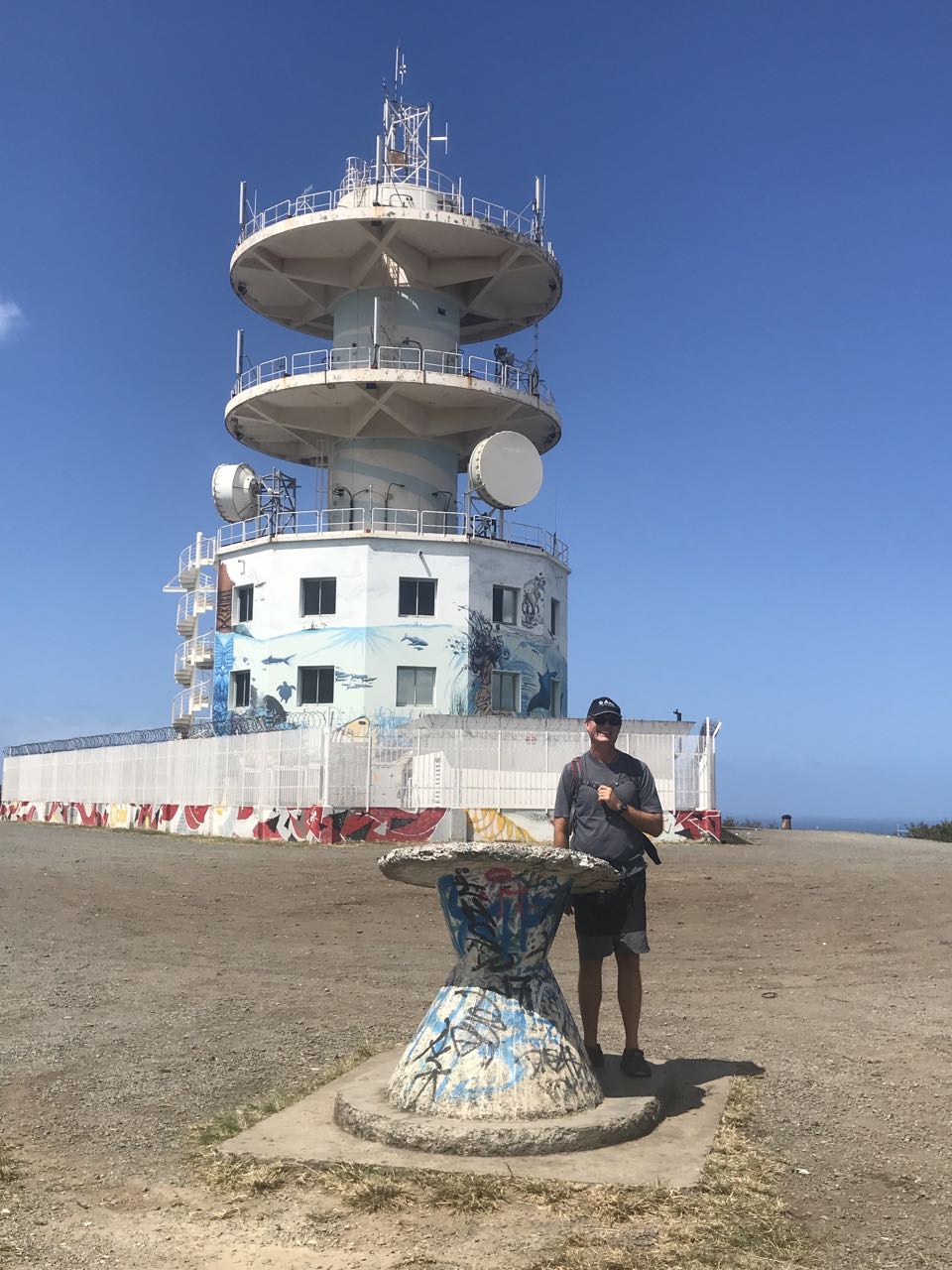
A trip up a hill for some views (on route to the Zoo)
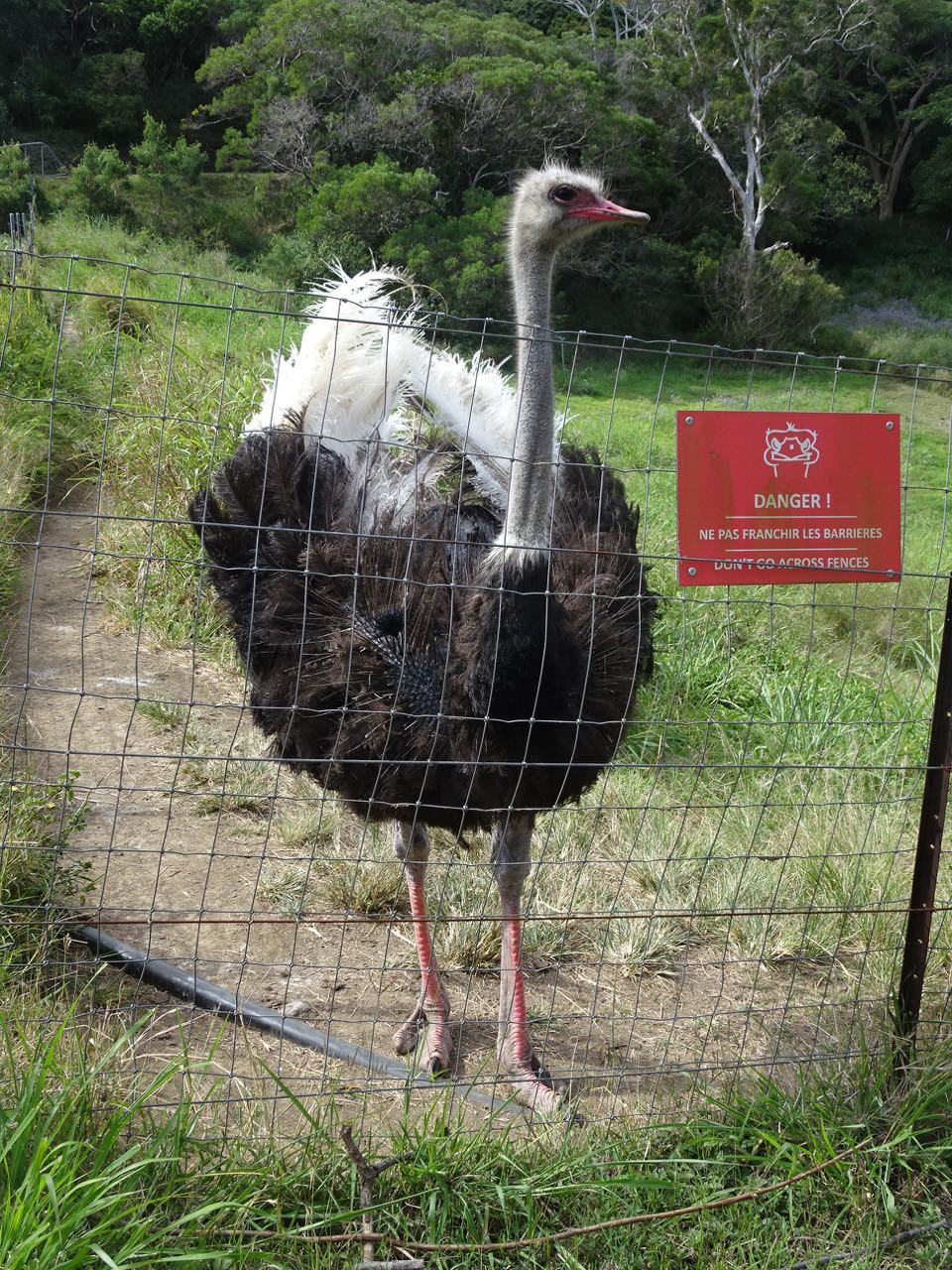
The zoo was very nice. They called it a “Zoo and Nature Park” on the sign. It was light on the zoo and heavy on the park. We didn’t see any of the usual zoo fare like giraffes or bears or dozing lions, but they did have a few monkeys, a handful of reptiles and loads of birds. New Caledonia has a pretty interesting set of endemic birds, including pastel hawks and the world’s largest pigeon, which is the size of a goose. They also have the closest living relative to the extinct dodo. They also have Rainbow Lorikeets, which are beautiful iridescent parrots. They are sweet and curious, but they make poor apartment pets because they are pretty loud and screechy. They had one big enclosure after another filled with lots of other parrot varieties, so I spent the day trying to scratch them all without getting my fingers nipped.
The zoo was mostly birds - Kyle loved it!
After ensuring that we had walked every trail and seen every animal in the zoo, we made for home. The sign on the bus stop said the next one wasn’t due for an hour, so we decided to go for the whole set and walk back to the boat. At least it was downhill. We were pretty limpy from blisters by the time we arrived, but at least we felt like we had properly earned the free welcome drink the marina had given us a coupon for when we arrived.
As we were walking back from the bar to the boat, Hannah from Muse intercepted us. She was with Sarah. Phil and Ollie were bringing the boat from the anchorage to the end of our line of docks. They had come to town to pick up Guy, a friend of theirs who would be sailing around with them for the rest of the week. We all met on Muse to talk about our plans to see if we could arrange any overlap. We were trying to head east to a little island called Ua, which we had heard from several sources was not to be missed. They were trying to do the same. I said I didn’t think we would get there in one day because it was upwind and I am loathe to motor all day when we have perfectly good sails that will get us there eventually without polluting the air. The plan on Begonia was to leave early and tack as far as we could before stopping for the night along the way. Phil had at some point apparently deduced my purist streak and decided Muse would do the same. After all, Guy had not flown all of the way up from Australia to be driven around on a perfectly good sailboat, had he?
[Kyle]At the end of our twenty-four hour clearing out limit, it was time for us to leave Vanuatu. We did, but we didn’t.
The next day was Maryanne’s Birthday. It was raining buckets. I decided we would make it a cuddly day of leisure. Maryanne, of course, got to do whatever she wanted and, equally importantly, didn’t have to lift a finger to do anything she didn’t. I figured sailing in the rain would be on that (didn't want to) list, so we didn’t even try. Since we were at anchor in navigable waters, we could be considered underway, but not making way for reasons of safety. The main thing is that we could no longer go ashore or have direct contact with anyone ashore, even though we were within the boundaries of the country. That’s good, because when we did finally pull up anchor early the next morning, we knew that we would be bouncing back and forth between the islands of Vanuatu for a while.
Our trip started with twenty minutes of glorious sailing. After that, it rained like the day before. I was so wet, I insisted Maryanne stay inside in the dry while I tacked us back and forth across the route we had sailed on the way in.
The forecast was for big headwinds for the passage. Our visas had run out and could only be renewed in Port Vila, so we had to go. There was a really good window the week before, but we just weren’t ready to leave then, so we decided to suck up the headwinds. My strategy was to stay in islands of the Vanuatu group, using them as a breakwater of sorts until we had made our way far enough south to get to New Caledonia on one tack.
< Passage: sunsets, dolphins and some rain
It worked for the most part, but it was painfully slow. As we retraced our route north, it took us twenty-four hours of wet sailing in blasting winds to cover the same distance we had gone effortlessly in the multi-colored shadow of our spinnaker.
After two more days, we finally made it as far as Efate and Port Vila. The wind shifted ever so slightly and we were off to cross the open sea to the Loyalty Islands. We hedged a little windward of our destination, which allowed us to gradually turn away from the wind as we went. By the time we passed Mare Island in the wee hours of Day Seven, we were on a comfortable broad reach with the wind finally coming from behind.
Twelve hours later, we reached the Havannah Channel, the notorious entrance to the lagoon surrounding Basse Terre, the main island of New Caledonia. We had been warned about the currents there and had slowed to arrive near slack water.
We were half an hour early. We got a slightly lumpy ride and were briefly slowed to a crawl in the dying eddies, but we got in without trouble. We had just enough light to make it to Boise Bay, where we dropped anchor off of a pretty little resort for the night. The authorities require arriving vessels to check in at the capital city of Noumea. It’s a long way, though, and they are good enough to not insist that anyone navigate the lagoon in the dark, so they are cool about a ‘rest stop’ on the way in, provided no one goes ashore.
It’s still a long way from Boise to Noumea, so we were out at the first hint of daylight. We had a marvelous sail that nearly made up for the bashing we had taken on the crossing. The water was so flat, we couldn’t even feel the boat move. The spinnaker pulled us mightily and the wind was even kind enough to bend with us as we curved around the south side of the island, so we didn’t have to gybe. We even had the current helping us.
We got to Noumea hours before we had planned. We called Port Moselle, which is notorious for never having any space. They didn’t sound hopeful, but we continued on anyway, just in case. Just as we were coming abeam the marina, they called us with a berth assignment. Woo, hoo! It was still warm from the boat that had just left, passing us on the way out.
We were here! The Marina handled Customs for us and sent Biosecurity to the boat right after. Once they were done, we were told we could lower our “Q” flag and go ashore. All that remained for us to do was to walk to Immigration in the morning to do their bit. Then we can start with chores and fun.
[Kyle]After our rapid departure from Aisari Bay, we found Luganville was much more cruiser friendly. We anchored right in front of the Beachfront Resort (it is just to the west of Luganville town on the island of Espiritu Santo). They explained that not only were we free to anchor without charge, we were also welcome to make use of their facilities. Then they gave us a really nice welcome pack with answers to all of the usual cruiser questions about things like “What should I do with my trash?” and, “Where can I get propane?” They even had a pre-printed leaflet to hand out to cruisers with all manner of useful info.
We were more than happy to pay our ‘fee’ by ordering a pizza and a couple of drinks at their beautiful restaurant. While we were doing just that we met Job, a cab driver, at the next table. He was there waiting for his Aussie fares to decide they were done drinking and were ready to go back to town. We talked a bit about what we had been up to and what we were hoping to do in Luganville. He offered to take us out to see some sights and after some back and forth we agreed to hire him for the day after next, when the weather would be the best. He then got on my good side when I mentioned that I liked kava. He did a quick check with the Aussies to make sure they weren’t done being drunk and then walked us to the kava bar behind the resort where we took turns buying each other a shell.
In the meantime, we walked into town with our packs to do some provisioning and suss out how to get to Customs, Immigration and the Port Captain’s office on the day we check out. Job spotted us about two thirds of the way and insisted on giving us a free ride the rest of the distance.
Back at the dinghy, we met a resort guest who was standing on the beach, regarding the Pudgy with interest. We introduced ourselves and immediately caught a Wirral (Liverpool area) accent. He and Maryanne exchanged the secret handshake (She had gone to University there), and soon we were all friends. His name was Ian. He insisted that we join him and his friend Gavin at their cabin for drinks. He said we would be doing them a favor as they had stocked up on way too much Pina Colada mix for the two of them. Well, if we can help out…
We squeezed in some time to snorkel on the wreck in the middle of the anchorage
Ian introduced us to Gavin. Gavin was from Brisbane. They explained that they were each retired bobbies from their respective cities. They had met at some Police convention decades ago, hit it off and have been going on holidays together ever since to places in which their wives or families weren’t interested. Gavin had been to Vanuatu before, but it was Ian’s first time. He kept expressing amazement that we had sailed all of the way there and seemed genuinely impressed with our accomplishments. He laughed for nearly a full minute when we told him we had spent a Winter in Preston. Gavin just thought we were nuts, but he kept prodding us for more stories.
Our Pina Colada glasses were the magic ones that never go below half full, so I think we may have had a little over one and a half each. I remember getting home, but I don’t remember how.
The next day, Job came to pick us up for our day tour and graciously allowed us to bring Ian along. We started with a round of all of the offices we needed to visit to check out. Since we had picked up the forms earlier, all we had to do was run in and drop them off. Then we headed to a kastom village for a bit of Ni-Van culture.
In the more remote islands of Vanuatu, the older children are sent to boarding school in either Port Vila or Luganville. To make their stay easier, the various islands set up satellite villages near the cities where the kids can stay as well as others coming to the city for visits. Alongside these villages, they set up Kastom Villages where they demonstrate their traditional lifestyle. It was explained that these villages had the dual purpose of allowing visitors to see cultures that are too difficult to travel to and to teach each new generation of villagers the traditional skills of their island. Job was really eager to take us to the villages. He said over and over how much he loved the traditional Ni-Vanuatu life and how proud he was of it and he wanted us to see it too.
It didn’t work out so well for him. The village was not doing anything that day because everybody was at a funeral. Job begged and begged and they agreed to open for us later (… uncomfortable…).
Killing time at $Million point. We had brought along our snorkel gear but it was a bit too churned up in the surf for us to think it worthwhile.
While we killed time, he took us to Million Dollar Point. This was a beach where the American Military dumped a whole load of stuff. It happened after World War II. The American military, which had fortified Vanuatu against a possible Japanese attack, were packing up and leaving. They didn’t have enough room for everything in their ships, so they offered the then-French & British governments the surplus for pennies on the dollar. The local governments figured they would get it all for free when the Americans left, so they refused to pay. When they did this, the Americans drove it all into the sea so no one could have it. The Ni-Vans thought they had all gone mad.
Million Dollar Point may have been more interesting fifty years ago. Now, everything has been there so long that all you can see are rusty lumps covered with marine growth. We all tired pretty quickly of trying to distinguish between boilers, engine blocks and transmissions. What was nearly as interesting was lots of conglomerate with WWII era glass bottles embedded within. Ian decided he wanted a couple of old medicine bottles for his windowsill at home and we all became involved in finding and prying loose the best candidates for him.
That still didn’t eat up enough time, so we just sat at a picnic table looking out at the sea and talking. During the course of the conversation, we were talking about our impressions of Vanuatu when Ian said something I liked very much.
“The Ni-Vans seem like they are all born with smiles on their faces.”
Indeed, they do. I stole a look to the far side of the table at Job. His face was bright white teeth surrounded by a black beard and his eyes sparkled. I’m not sure he had even heard our conversation. From what I’ve seen, he pretty much always looks like that. There was news that some big survey had ranked the Ni-Vanuatu as the happiest people in the world. We didn’t doubt it a bit.
While we were at the beach, another traveler arrived and started up a conversation with us. Her name was Wilma. She was from Holland. She had retired a few years ago and was backpacking around the world herself like a college dropout. When she leaves Vanuatu, she will be flying to Fiji to sail with Humberto, Vulaga’s adopted cruiser. Small world.
We invited her to join us for our trip to the village, which was probably more than Job’s economy car cab could handle. We scraped bottom on almost every pothole. Most of the roads off the main highway were more pothole than road, so we cringed with guilt every time the car hit bottom. We offered to get out and walk through some of the worst bits, but Job wouldn’t have it.
A tour of Beterihi Cultural Park, and old WWII USA military base with the caretaker and character Aime Ruvua
There was a little bit more delay at the village as people were rounded up for our demonstration. We were given a bit of history and then were shown around traditional dwellings with time taken out to explain one item or another. A teenage boy arrived and showed us how to start a fire without matches. The trick, they tell us, is to keep the two pieces of wood inside by the fire pit at all times so they stay nice and dry for the next attempt.
This kid could do his fire-starting thing as a gag. “Hey, I want to start a fire. I think there are some matches on the shelf over there. Could you bring them to me?”
Rube goes over to shelf to get matches, finds them and then turns to see the kid holding a flaming ball of coconut fibers.
”Nevermind. I got it.”
The boy lit a fire from nothing in twenty seconds - Smoke in ten seconds, a fist full of fire in twenty.
Leweton Cultural Experience, Kastom Village
We were then given a sample of a typical breakfast, handed over from the fire. After my last traditional dining experience, I was a little skittish, but it turned out to be very simple and delicious with grated coconut and some roast potatoes and bananas. I could have eaten a whole serving bowl of that stuff.
The Grand Finale was the Water Music. I had no idea what to expect from a bunch of women slapping water, but it was incredible! The leader explained to us that they were going to demonstrate five different sounds. Then they started. Had I not been looking at them, I would have sworn we were listening to a group of drummers. In fact, I even had a look around to see if someone might be slipping in a little background drumming to enhance the effect, but it was just the four women in the water. They were doing bass and snare, cymbals and high hat all by themselves. Water was flying everywhere, as if we were all sat by an energetic fountain. The women turned their heads aside in a completely fruitless attempt to keep their faces dry.
Amazing Water Music - a Unique Vanuatu Cultural experience
When they finished their first sound, we all exploded in applause. They smiled their Ni-Vanuatu smiles while water dripped from their hair. We got way more than four more demos. They went through a long repertoire and even continued by themselves after we left. Even though I watched them intently the whole time, I still couldn’t figure out how they made that whole range of sound from just hands and water. I was trying to mimic the motion, when one of them showed me the trick to the bass was to hit the water with your thumbs. How does that work? I wanted to try it, but I wasn’t in the mood to get drenched, so it may be a while before I know.
We dropped Wilma off at her hostel and then Ian, Maryanne and I returned to the Beach Resort to fill Gavin in on our day. He’s a bit of a slow listener, so it took us several beers to tell him the story. He kept making it worse by sneaking off and buying a round even though we explained that the last of our Vatu would only be worth anything until we got in the dinghy. We had already cleared out and were enjoying our last twenty-four hours in Vanuatu before it was time to go. That meant we had to buy the next round to get rid of our Vatu currency. Oh, how we suffer.
Those guys are so great. We felt like we had known them a lot longer than three days. We parted with big hugs and wishes for a safe journey all around. We hope we get a chance to see them again someday.
[Kyle]From Norsup, we sailed up to Aisari Bay, just around the corner from Vanuatu’s second largest city of Luganville. We were heading there later to clear out, but we had a few extra days, so we had time for a stop along the way.
Aisari was very pretty. The big bay is accessed through a maze of shallow reefs, which flatten the seas and give it protection from all sides. We anchored away from the settlement and near the reef in anticipation of some good snorkeling. The nearby beach, which was still pretty far, was covered with conspicuous “Private” signs, so that took going ashore off of the table.
In the morning, we donned our snorkel gear and went in for a look. It turned out there wasn’t much to be seen. There were a few fish, but most of the coral was dead and the visibility was pretty poor. We decided Aisari was a good spot for a lazy weekend and got to work on that.
As we were getting ready to pull up anchor a couple of days later, a guy in an outrigger paddled out from the private beach. We bid him good morning. He responded in kind and then apologized. He explained that his father had sent him out to collect an anchoring fee. This seemed dodgy, and was certainly unexpected.
“How much does he want? Two hundred, three hundred?”
“Five thousand.”
Once he explained that he wasn’t kidding, we told him that we couldn’t afford that and that (if acceptable) we would leave instead. He accepted this without argument and paddled home. I get the feeling that may have been the goal in the first place. Strangely he did not approach any of the other anchored boats that were nearby, so we remain uncertain if this was normal or opportunistic.